Maritime update
28 July 2026


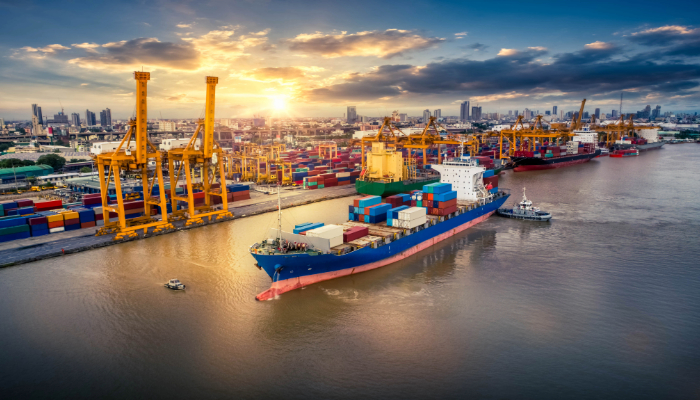
While the past six months has been notable for global shipping instability and upheaval, at a domestic level we have seen two significant decisions from Australia’s superior courts, which have clarified key principles of maritime practice. We have also seen the Australian Government's Strategic Fleet program move from policy into implementation. Finally, Australian Maritime Safety Authority (AMSA) has updated the regulatory framework governing lifesaving equipment on Australian vessels, Marine Order 25 (Equipment - life saving) with changes coming into effect on 1 June 2026.
We discuss the practical implications of these developments below.
As a land ‘girt by sea’, abundant in minerals and reliant on overseas manufacturing, Australia is the fifth largest user of shipping services globally. This means that while geographically distant from much of the world, Australia is not isolated from international turmoil (such that marine insurers with an interest in the jurisdiction are by no means immune from the ramifications that flow).
However, the setting of Australia’s most significant maritime case in many years[1] is the port town of Devonport, Tasmania (home to just 26,000 people); a veritable David, if you will, when faced with the bulk cement carrier, MV Goliath.
On 28 January 2022, the Goliath, owned by CSL Australia Pty Ltd (CSL), was involved in an allision into two tugs and a wharf, causing the tugs to sink and release dangerous hydrocarbons into the environment. A major clean up and salvage operation ensued for the Tasmanian Ports Corporation (TasPorts) at a cost of $22 million ($17 million related to wreck removal costs incurred by TasPorts).
The question that ultimately went before the High Court of Australia[2] was whether claims for wreck removal expenses fell exclusively within the ambit of Art 2(1)(d) of the Convention on the Limitation of Liability for Maritime Claims 1976 (a provision that Australia has opted out of, pursuant to its right of reservation under Art 18(1)), or whether these claims may also fall within the plain and ordinary meaning of the terms of Art 2(1)(a), which is a more general provision covering loss of or damage to property.
The High Court ultimately found that while ordinarily claims for wreck removal may be capable of being limited under both Art 2(1)(d) and Art 2(1)(a), where a state has exercised a right of reservation under Art 18(1), wreck removal claims will be entirely excluded. That is to say that claims for wreck removal are not limitable in Australia. In reaching that decision, the High Court had regard to recent major decisions from England & Wales and Hong Kong, respectively: The Flaminia[3] and The Star Centurion[4].
The case is of particular significance noting that Australia’s position with respect to the Nairobi Convention on Wreck Removal remains uncertain.
It also shows that Australian courts will interpret international conventions with reference to internationally understood legal principles, which assists in providing certainty to shipping interests.
Another recent case of interest is Mitsui O.S.K Lines Ltd v The Ship: Yangze 22 (No 2)[5], where Justice Derrington held that the Federal Court of Australia was an inappropriate forum to hear proceedings arising out of a collision between the Yangze 22 and the Vega Dream, which occurred on 30 December 2024 in the Beicao Fairway near the Port of Shanghai. Notably, at the time of commencement of the Australian proceedings, three related proceedings were already on foot in the courts of Shanghai.
In seeking the stay, it was for the Owners of the Yangze 22 to demonstrate that Australia was so ‘inappropriate a forum for the determination of these proceedings… that their continuation will be oppressive and vexatious to it.’
While the Plaintiff pointed to the perceived juridical advantages of proceeding in Australia (including higher liability limits and the existence of security in their favour), Justice Derrington observed that these factors were not of themselves determinative, and noted Lord Goff’ position in the Spiliada, that ‘regard must be had to the interests of all parties and the ends of justice.'
It was Her Honour’s view that the ‘risk of inconsistent findings as to liability, apportionment, and quantum should both this Court and the Shanghai Maritime Court proceed to determine liability for the collision is obvious.’[6] This decision clarified that Australian courts will not permit matters being litigated under their jurisdiction when a more appropriate jurisdiction is already proceeding with the matter.
Outside of the courts, current geopolitical upheaval is commanding attention. Notably, increasing costs of fuel and freight are primary concerns for stakeholders throughout the supply chain, and these concerns have been acknowledged publicly by the Insurance Council of Australia, and state and federal governments. Noting the importance of the freight industry and its contributions to Australia, forthcoming measures to combat these challenges include the Transport Resilience and Capacity Kickstart pilot program, which is looking to encourage efficiency through an increased volume of ship and rail freight. In shoring up Australia’s fuel reserves, the recent Federal Budget also included proposals for fuel security and the development of cleaner fuels.
In this same vein, on 29 May 2026, the Australian Government took its first significant step towards implementing the maritime strategic fleet, by announcing the ANL Kokoda as the first of three vessels in the pilot program.[7] Minister for Infrastructure, Transport, Regional Development and Local Government, Catherine King noted that ‘recent global events have emphasised the importance of Australia having a resilient domestic maritime sector.’
We otherwise note that AMSA has made changes to the Marine Order 25 (Equipment – life-saving) 2026, which came into effect on 1 June 2026. These changes reflect the newly adopted resolutions of the Maritime Safety Committee, amending Chapter III of the International Safety of Life at Sea Convention and changes to the International Life-saving Appliance Code. This Marine Order provides for the carriage and testing of life-saving equipment and the recovery of persons from the water.[8]
We hope you find this update informative and useful. Please contact our Maritime and Transport team for more information about any of the cases written about in this article.
[1] CSL Australia Pty Ltd v Tasmanian Ports Corporation Pty Ltd [2026] HCA 15
[2] Australia’s superior court from which no appeal is possible and a place where few maritime claims have traversed in recent years
[3] [2025] 3 All ER 703
[4] (2023) 26 HKCFAR 297
[5] [2026] FCA 476.
[6] Mitsui O.S.K. Lines Ltd v The Ship: Yangze 22 (No 2) [2026] FCA 476 [50].
[7] The pilot program forms part of the recommendations made by the Strategic Fleet Taskforce in November 2023, towards a strategic fleet of 12 privately owned and operated Australian-flagged vessels to be available for requisition in times of national need.
[8] Marine Order 25 (Equipment - life-saving) 2026 s 2.
