A coverage decision ISR insurers and insureds must read
25 June 2026


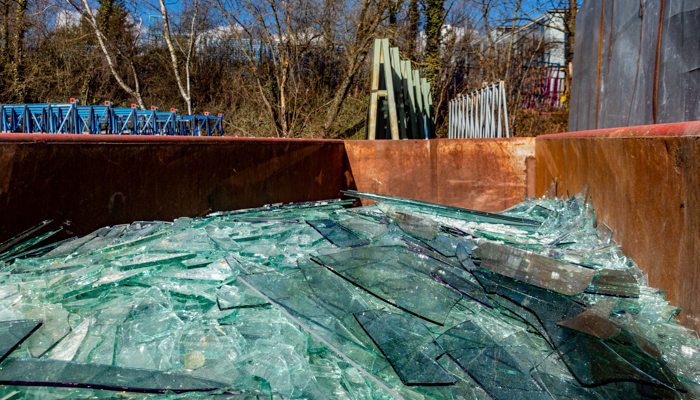
Case Note on Glass Recovery Services Pty Ltd (recs and mgrs apptd) (in liq) v Certain Underwriters at Lloyd's [2026] VSC 314
When the environmental regulator entered a glass recycler's site and disposed of two enormous stockpiles of glass weighing 118,500 tonnes,[1] the recycling business sought indemnity under its Industrial Special Risks policy (Policy), but recovered nothing.[2] The insurers declined the claim and, in a decision handed down on 28 May 2026, the Supreme Court dismissed all of the insured’s arguments, and expressed the preliminary view that the insured be required to pay Underwriters’ costs.[3]
For insurers, two key aspects of the Court’s reasoning are of significance. First, the judgment reconfirmed the application of the Wayne Tank principle. In circumstances where a loss has more than one concurrent cause, and one of them is excluded, the exclusion will normally entitle the insurer to decline indemnity.[4] Second, the Court held that an insured who claims that works damaged its property has the onus of proving it, with indemnity only available for physical damage to property and write-backs in the Policy restoring only as much as the precise words allow.[5] This case note focuses on these parts of the judgment.
Background
Glass Recovery Services (GRS) ran a glass reprocessing business in Coolaroo under an Environment Protection Authority (EPA) licence issued in May 2018 that was subject to conditions imposing a cap on storage quantities, a prohibition on waste burning and a prohibition on discharging contaminated surface water.[6]
During 2018 and 2019, the EPA’s inspections repeatedly recorded that GRS’s stockpiles were contaminated with combustible waste (paper, cardboard, plastics), that sub-surface ‘hotspots’ were generating heat and that leachate was escaping the site.[7] After issuing a show cause notice and being unsatisfied with GRS’s failure to respond, the EPA took possession of the premises in late 2019 and removed and disposed of two stockpiles (the Stockpiles). The EPA took this step pursuant to s 62 of the Environment Protection Act 2017 (Vic).[8]
In late 2019, GRS lodged an insurance claim under its Policy. The claim was declined. GRS’s licence was subsequently revoked, and receivers were appointed in 2020.[9] The receivers thereafter pursued indemnity under the ISR policy.
GRS advanced four claims, all claimed to arise from a single insured event, namely the EPA's removal and disposal of the Stockpiles (the Event).[10] The claims advanced comprised:[11]
- the physical loss of the Stockpiles;
- the EPA's clean-up costs, claimed in the sum of approximately $28.8 million;
- damage to other property at the premises, being concrete paving, a weighbridge, a conveyor, and pits and drains;, and
- consequential loss in the form of lost profits and lost gate fees.
It was common ground that the removal of the Stockpiles constituted ‘physical loss’ under the Policy.[12] The principal area of dispute concerned the application of Perils Exclusions 1(b), 4(a), and 6(c); Endorsement NMA 2342; Condition 11; and Express Warranty 2(a).[13]
Key issues before the Court
To determine whether the Perils Exclusions, Endorsement, Condition and Express Warranty precluded cover under the Policy, the key issues to be determined by Justice Matthews were:[14]
- why the EPA removed the Stockpiles;
- whether the EPA’s removal amounted to a ‘confiscation … by or under the order of’ a public authority in accordance with Perils Exclusion 1(b) and, if so, whether the write-back restored cover;
- whether Endorsement NMA 2342 and Perils Exclusion 4(a) independently defeated the claim;
- whether the self-heating in the Stockpiles triggered Perils Exclusion 6(c);, and
- whether GRS had failed to take reasonable precautions in breach of Condition 11.
The Court’s decision
All of GRS’s claims were dismissed in full.[15] This was because:
- although the loss of the Stockpiles fell within the Section 1 insuring clause,[16] it was excluded by Perils Exclusions 1(b), 4(a), and 6(c), as well as by Endorsement NMA 2342;[17]
- the clean-up costs and damage to other property at the premises were not covered under Section 1 and would in any event have been excluded by Endorsement NMA 2342;[18]
- the consequential loss claims failed for want of proof and causation and were, in any event, excluded by Perils Exclusion 1(b), hence consequential loss was assessed at nil;[19]
- the insurers did not succeed in applying Condition 11 because they did not meet the evidentiary burden.[20] The judgment also contains detailed commentary on the basis of settlement and on the expert evidence, although those observations are outside the scope of this case note.
The Court’s reasoning
On the causation question: why the EPA removed the Stockpiles
Before dealing with the exclusions, Her Honour found it necessary to deal with the question of causation.[21] Her Honour explained the Wayne Tank principle in plain terms: in ‘a case in which there are two proximate causes of loss, one of which is covered and one of which is within an exclusion, then the exclusion generally applies’ causing the claim to fail.[22] The ‘proximate cause’ means the ‘direct, real, common sense, dominant, operative or efficient cause’.[23] If the loss of the Stockpiles was caused by any of the excluded perils or the terms of Endorsement NMA 2342, then the entirety of GRS’s claim would fail.
GRS argued that the proximate cause of its loss was simply the EPA’s act of removing the Stockpiles, which they said was not itself excluded.[24] The Court held that this confused the Event (i.e. the removal) with the cause of the Event, and the real question was what led to the EPA removing the Stockpiles.[25] The causation inquiry was broken down into whether the Stockpiles contained organic waste; what caused the hotspots; what caused the leachate; and why the EPA intervened.[26]
On the facts, Her Honour found that the Stockpiles did contain organic waste and combustible recyclable and waste material.[27] Further, it was held that the hotspots were caused by spontaneous self-heating, fermentation, or combustion of that material,[28] and that leachate carrying contaminants was escaping the site.[29] The Court therefore concluded that the presence of these conditions prompted the EPA to intervene.[30]
The Court held that contamination, spontaneous heating, and the EPA’s confiscation of the Stockpiles were each a proximate cause of the loss, because each was a necessary precondition to the Stockpiles being lost.[31]
Since loss occasioned by contamination and self-heating was excluded under the Policy, Underwriters were entitled to decline indemnity in what Her Honour described as, a straightforward application of the Wayne Tank principle.[32]
GRS’s claim for recovery of loss resulting from damage to other property (i.e. concrete paving, a weighbridge, a conveyor and pits and drains) also failed. The Court held that the onus was on GRS to show, on the balance of probabilities, that the EPA's activities caused or exacerbated the damage claimed, not merely that damage existed alongside the works.[33] For the concrete paving, significant pre-existing damage was found therefore GRS had not shown that the EPA's works caused or worsened it.[34] The conveyor and weighbridge claims failed for the same reason, namely the absence of established causation.[35] Only the claim in relation to the pits and drains cleared this hurdle, with Her Honour finding the EPA had plugged them with concrete, though that item was in any event excluded by NMA 2342.[36]
On the Application of Perils Exclusion 1(b): whether the EPA’s removal amounted to a ‘confiscation … by or under the order of’ a public authority and, if so, whether the write-back restored cover
Perils Exclusion 1(b) operated to remove cover for loss ‘resulting from confiscation, nationalisation, requisition or damage to property by or under the order of any Government or Public or Local Authority’.[37] The key question in respect of Perils Exclusion 1(b) was therefore whether the physical loss of the Stockpiles resulted from ‘confiscation … by or under the order of (the EPA)’.[38]
Her Honour held the EPA’s action of removing and disposing of the Stockpiles was a ‘confiscation’ as it took the Stockpiles and did not return them, according to the ordinary dictionary meaning of that word.[39] On the phrase ‘by or under the order of’, Her Honour held that it was enough that the confiscation was by the EPA.[40]
GRS also sought to invoke the write-back for ‘loss, destruction of or damage to, or the cost of removal of, sound property at the Premises for the purpose of “preventing or diminishing imminent damage by, or inhibiting the spread of, fire…’ (Write-Back).[41] The argument failed for three reasons: first, for the wWrite-bBack to operate the loss had to be caused to ‘sound property’ however the Stockpiles were not considered ‘sound property’ as they were the very source of the risk;[42] second, the EPA’s actions in causing the physical loss were for the purpose of preventing imminent damage or inhibiting the spread of a fire/peril, however the EPA did not act to prevent damage to insured property, but rather acted to address risks to health and safety of persons and to avoid the risk of pollution or environmental harm;[43] and third, the wWrite-bBack required the relevant damage by fire to be imminent, which it was not.[44]
On the Application of Perils Exclusion 4(a) and Endorsement NMA 2342: whether Perils Exclusion 4(a), Perils Exclusion 6(c) and the Endorsement NMA 2342 defeated the claim
Her Honour gave consideration to Perils Exclusion 4(a), which provided that the insurers would not be liable for loss ‘occasioned by or happening through … contamination or pollution’,[45]It was held that this exclusion would also have been enlivened to deny coverage, as contamination of the Stockpiles by the presence of organic material was a proximate cause of the loss of the Stockpiles.[46]
Additionally, Her Honour held that Perils Exclusion 6(c) would have denied cover as it applied to loss ‘occasioned by or happening through … spontaneous combustion … [or] spontaneous fermentation or heating’ and the EPA’s intervention causing the Event was occasioned by or happened through spontaneous combustion or self-heating of the Stockpile.[47] Further, neither of the provisos in Perils Exclusion 4(a) or 6(c) were considered to operate to wWrite-bBack coverage.[48]
Further, notwithstanding Her Honour’s view that the claim was excluded by Perils Exclusion 1(b), the Court concluded that the claim would have been excluded in any event by Endorsement NMA 2342, which excluded, ‘any loss … which arises from any kind of seepage or any kind of pollution … or threat thereof’.[49] The Court held that this exclusion was ‘wide-ranging’,[50] and pointed to the fact that GRS conceded at first instance (in its opening submission) that the purpose of the EPA’s actions was to ‘clean up’ hotspots and to prevent ‘pollution’ and danger to health.[51]
On the Application of Condition 11: whether GRS had failed to take reasonable precautions per Condition 11
The Court considered that insurers bore the onus of establishing that GRS breached Condition 11, which imposed an obligation on GRS to, ‘take all reasonable precautions to prevent loss, destruction or damage to the property’.[52] Her Honour held that in order to establish a breach of Condition 11, insurers had to prove that GRS deliberately courted a recognised danger by taking measures known to be inadequate.[53] Whilst Her Honour found GRS had not done enough to satisfy the EPA and had therefore ‘courted the risk’ of regulatory action, establishing breach imposed a ‘heavy evidentiary burden’,[54] which the insurers did not successfully discharge.[55] Therefore, the insurers failed to establish a breach of Condition 11, being the obligation to take reasonable precautions.[56]
Key takeaways for insurers
The case confirms that the presence of one excluded proximate cause can sink an entire insurance claim. If a loss has two proximate causes and either is excluded, insurers will normally be entitled to apply the exclusion. In such cases, an insured cannot rely on a covered cause of loss where an excluded cause is equally operative.[57]
Broad causal wording widens the application of an exclusion, as is did with the perils exclusion in issue in this case. Phrases like ‘occasioned by’ or ‘happening through’ are broad and merely require a causal connection. Broad language of this kind will likely catch more contributing causes. The more contributing causes that are caught, the greater the potential for one of them to be excluded. As a result, careful consideration is required to be given to the breadth of the causal wording contained within the exclusions in the policy. This is an important consideration when assessing exposure.[58]
Proving that works caused the insured damage is the insured's burden. This was the case in Glass Recovery where the insurer relied on before-and-after photographic comparison evidence that the concrete was sub-optimal before the EPA attendance and already cracked. The insured did not meet the burden imposed upon them as they led inconclusive evidence about heavy vehicle use and the EPA's roller, and there was evidence of pre-existing defects, wear and tear and damage caused by the passage of time. These factors were all used by Underwriters and resulted in the insured failing to clear the evidentiary burden imposed upon them.[59] Given this, it is important for insureds to have documented evidence of the state of the property before and after works are undertaken, and the absence of dated inspections and photographs may be decisive in insurance disputes arising under ISR policies.[60]
[1] Glass Recovery Services Pty Ltd (recs and mgrs apptd) (in liq) v Certain Underwriters at Lloyd's [2026] VSC 314 at [16(a)], [791] (Glass Recovery).
[2] Ibid at [910].
[3] Ibid at [9], [783], [910]–[911].
[4] Ibid at [604], [606], [697].
[5] Ibid at [419], [618], [752]–[753].
[6] Ibid at [1], [4]–[5].
[7] Ibid at [130], [164], [180].
[8] Ibid at [7], [178], [183].
[9] Ibid at [8]–[9].
[10] Ibid at [10], [12].
[11] Ibid at [10].
[12] Ibid at [11].
[13] Ibid at [95]–[98].
[14] Ibid at [122]–[123].
[15] Ibid at [910].
[16] Ibid at [263].
[17] Ibid at [783].
[18] Ibid at [784]–[786].
[19] Ibid at [787].
[20] Ibid at [770]–[771].
[21] Ibid at [603].
[22] Ibid at [606] citing AerCap Ireland Limited v AIG Europe SA [2025] WLR(D) 315 at [595(3)] (Butcher J).
[23] Ibid at [607].
[24] Ibid at [127].
[25] Ibid at [128].
[26] Ibid at [129].
[27] Ibid at [142], [145]–[146].
[28] Ibid at [159]–[160].
[29] Ibid at [164]–[165].
[30] Ibid at [191].
[31] Ibid at [604]
[32] Ibid.
[33] Ibid at [419].
[34] Ibid at [430].
[35] Ibid at [388], [426]-[427].
[36] Ibid at [400], [786].
[37] Ibid at [95(a)].
[38] Ibid at [643].
[39] Ibid at [645].
[40] Ibid at [656].
[41] Ibid at [665].
[42] Ibid at [660], [664],
[43] Ibid at [615], [669].
[44] Ibid at [615]–[616].
[45] Ibid [675].
[46] Ibid at [703].
[47] Ibid at [731], [750].
[48] Ibid at [704]–[705], [755].
[49] Ibid at [707]–[710].
[50] Ibid at [725]
[51] Ibid at [722], [730].
[52] Ibid at [756].
[53] Ibid at [770].
[54] Ibid at [771].
[55] Ibid.
[56] Ibid.
[57] Ibid at [606], [697].
[58] Ibid at [696]–[697].
[59] Ibid at [419], [370], [388], [426].
[60] Ibid at [357], [360]–[363], [367]–[368].
