Why is everyone suddenly talking about Triple Zero?
05 December 2025


We would like to thank Jasmine Thai for her contribution to this article.
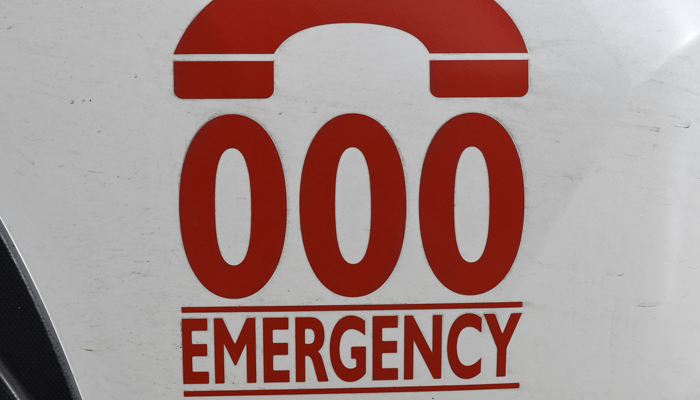
Triple Zero
One of the first lessons we learn as children is to call Triple Zero in an emergency. Established in 1961, it has long been Australia's primary national emergency number, forming part of Australia’s Emergency Call Service (ECS).
However, recent outages to some Triple Zero calls have raised questions: why the sudden concern and why doesn’t it always work? The answer lies in the significant changes to how we use telecommunications prompting new measures to ensure people can reach emergency services when they need them most.
History of landlines and the switch to mobile phones and ‘digital’
The concept of a landline, while not entirely relegated to history, has become increasingly unfamiliar to recent generations. However it wasn’t very long ago that nearly every Australian household had a telephone connected by a pair of twisted copper cables to the local telephone exchange – the ‘landline’ – which was their main form of communication to the outside world. The old landline also provided a key feature that is often overlooked - reliability. Landlines were powered independently of a household’s mains power and created a dedicated connection to the local telephone exchange.
Those copper cables, or more likely these days to be a coaxial cable or optical fibre, still runs into most houses but is primarily used for home internet. With mobile phones and increasingly unified messaging apps, the ability to talk to anyone from anywhere (including seeing them on video) is simple and seamless.
The Australian Communications and Media Authority (ACMA) research into the uptake in use of mobile phones, revealed ‘over the last 6 years, those using only a mobile phone (no landline) to make calls has doubled from 29% in the 12 months to June 2015, to 60% in 2020.’[1]
Another key change in the last 20 years is the drive to digital communications. Whilst the difference between analogue and digital is largely irrelevant today, it was only 20 years ago that the transition from an analogue voice channel to voice over IP (VoIP) was seen as a significant development.
Today, almost all communications whether voice, email or surfing the web, are bundled up as digital packets of data transmitted across the internet and reassembled in real time at the other end.
Whilst it may not be essential that an email is delivered immediately or that there are problems with the online meeting, it is crucial to ensure that emergency calls get through to Triple Zero operators immediately.
This is even more important when you consider Telstra’s internal data, which shows that calls to Triple Zero (000) have increased by 44% over the past decade, from 8.1 million in 2014 to 11.7 million in 2024.[2]
The Bean Review – Recommendations and implementation by Government
Following Triple Zero outages in 2023, the Federal Government established a review to consider whether the ECS was still fit for purpose (the Bean Review).
The Bean Review provided 18 recommendations to the Government to address the gaps it found in its investigation into the outages. One of the key observations made from the investigation was:
‘… the different roles and functions of the participants in the delivery of Triple Zero resulted in each having its own siloed view of the system, and each “staying in its lane” on the day.’
We discuss the Bean Review and the previous recommendations that were implemented in another article here.
Recommendation 2 of the Bean Review aimed to address the concern above and suggested to Government to ‘establish a Triple Zero custodian, with oversight of and overarching responsibility for the efficient functioning of the Triple Zero ecosystem, including monitoring the end-to-end performance of the ecosystem.’[3]
Triple Zero Custodian and Emergency Call Powers
The Telecommunications Legislation Amendment (Triple Zero Custodian and Emergency Calling Powers) Act 2025 (the Act) commenced on 1 November 2025 and introduced new obligations and powers, including:
- providing further powers to the ACMA in relation to direct information sharing and certain action
- legislating a Triple Zero Custodian being the Secretary of the Department of Communications, and
- increasing the maximum civil penalties from $1250,000.00 to $30 million.
The Australian Telecommunications Association (ATA) CEO Luke Coleman commented on the importance of the new protections and the role of industry in an interview with the ABC Insiders, stating ‘What new protections do we need to put in place to ensure that it is as robust as possible? The triple zero custodian is going to play a role in that as well. But it is safe to say, industry is absolutely united in their approach to saying we will work together to make triple zero as robust as it can be. And to be as trusted as it can be for Australians when they’re facing an emergency.’[4]
Conclusion
The Act has provided new information sharing powers to the ACMA and legislated the role of the Triple Zero Custodian, which will bolster the ECS ecosystem. This is one part of a number of reforms slated to be implemented in response to the recommendations from the Bean Review.
[1] Australian Communications and Media Authority, December 2020, Mobile-only Australia: living without a fixed line at home
[2] National Emergency Communications Working Group – Australia and New Zealand, 30 June 2025 “Emergency Communications in Australia White Paper: Providing a pathway for the future of the critical link between the community and first responders pg. 6.
[3] Richard Bean, Final Report, March 2024, Review into the Optus outage of 8 November 2023 – Final Report | Department of Infrastructure, Transport, Regional Development, Communications and the Arts 3 Department of Infrastructure, Transport, Regional
[4] Australian Telecommunications Association, Transcript: ATA CEO Luke Coleman on ABC Insiders, 11 October 2025, Transcript: ATA CEO Luke Coleman on ABC Insiders 11/10/25 - Australian Telecommunications Alliance.
